
If your team uses AI tools, AI literacy is no longer a nice-to-have, it’s now a legal obligation under the EU Artificial Intelligence Act. At Conv3rt Marketing, we work with business owners navigating the combination of compliance and growth, and Article 4 of the EU AI Act is something every organisation using AI needs to understand. The good news is that getting AI-literate is less about technology qualifications and more about building confident, responsible habits around the AI tools your team is already using.
The AI Act applies to any business that uses AI in its operations, not just the companies building the technology. If your team relies on AI tools for content creation, customer segmentation, or campaign optimisation, you’re classed as a deployer, and the rules apply to you. That includes UK businesses selling into the EU market or using EU-based AI services.
In this article, we’ll walk you through what Article 4 requires, who it applies to, and the practical steps you can take now. We’ve also created two free downloadable templates, an AI Tool Audit Register and an AI Tool Usage Guide, that we built for our own compliance and are sharing to give you a head start.
What Is AI Literacy Under the EU AI Act?
AI literacy, as defined in Article 4 of the EU Artificial Intelligence Act, means ensuring your staff and anyone else operating AI on your behalf have the skills, knowledge and understanding to use those tools in an informed and responsible way. That covers being aware of what the AI tool actually does, where it can go wrong, how to spot a misleading or biased output, and how to handle data (including personal data) responsibly when using it.
The obligation was written with proportionality in mind. Businesses are required to take measures “to their best extent,” which means the bar is scaled to your size and the complexity of the AI you use. An SME using an AI writing assistant is not held to the same standard as a multinational deploying predictive hiring algorithms. That said, proportionality is not an opt-out, as regulators will expect to see genuine, documented effort.

What “Sufficient” AI Literacy Looks Like in Practice
For most small and medium-sized businesses, a sufficient level of AI literacy will typically mean your team understands the following for each AI tool they use:
- What the tool does, in plain language
- Where it is prone to errors, hallucinations, or biased outputs
- How to recognise when an output should not be relied on
- How personal data is processed within the tool and what that means for GDPR compliance
- When to escalate or override the AI’s recommendation
This does not demand deep technical expertise across your team. It does require deliberate, documented training, even if that means a one-hour onboarding session and a short internal guide.
Why August 2026 Is the Date That Matters
Article 4 technically became law on 2 February 2025. However, the enforcement machinery, i.e. national market surveillance authorities, begins operating on 2 August 2026. From that date, regulators have the power to investigate, fine, and take action against businesses that cannot demonstrate they have taken appropriate AI literacy measures.
Penalties for non-compliance with Article 4 fall under the general infringement tier: up to €7.5 million or 1.5% of global annual turnover, whichever is higher. For a growing SME, that’s a material risk.
The other reason August 2026 matters is that it coincides with the start of enforcement for high-risk AI obligations, things like human oversight requirements, impact assessments and quality management systems. Businesses that have not yet addressed AI literacy will find those more complex requirements significantly harder to meet. AI literacy is the foundation on which the rest of your AI compliance sits.
Does the EU AI Act Apply to UK Businesses?
This is one of the most common questions we hear. The short answer is: possibly yes. The EU AI Act has extraterritorial reach. So if your business places AI systems on the EU market, or if your AI outputs affect people inside the EU, the Act may well apply to you.
Even if your business is UK-only, UK regulatory guidance is increasingly aligned with EU direction on AI, and proactive compliance now will protect you as UK AI legislation continues to develop. Many UK businesses operating or marketing into Europe are treating the August 2026 enforcement date as their own working deadline.
Practical Next Steps for Business Owners
Getting AI literacy compliance underway does not need to be complicated. A sensible starting point for most SMEs involves three things:
- Auditing the AI tools your team currently uses
- Creating brief guidance documents explaining how each tool should and should not be used
- Running a short training session to walk staff through the risks and responsibilities involved
Keeping a record of those steps matters. If regulators ask, you need to show genuine effort, and documentation is your evidence.
Free Downloadable AI Literacy Templates
We’ve created our own in-house AI Tool Audit Register, and we’re sharing the blank template (just a little further down), with instructions on how to use it, to give you a head start on becoming AI literate. After all, more spreadsheets isn’t exactly the kind of thing busy businesses can get excited about, so this should make your life a little easier.
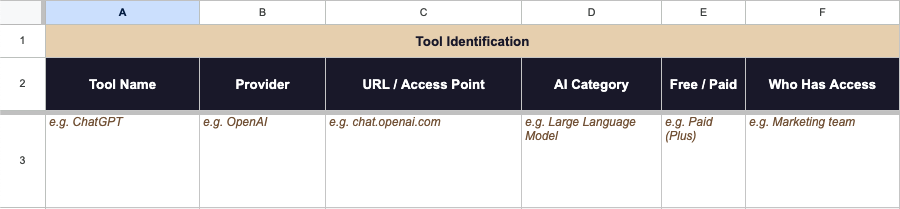
The register walks you through every question you need to answer for each AI tool your team uses:
- What data goes into it
- Whether the provider uses your inputs for training
- Who has access
- Whether you’ve actually documented any of it
Most businesses we speak to are surprised by how many AI tools they’re already using once they start counting the features baked into platforms like Canva, Notion, Google Ads, and their CRM.
But knowing what tools you use is only half of it. Article 4 expects you to show that your team understands how to use those tools responsibly. That means documenting the limitations, setting clear rules on what data can and cannot go into each tool, and establishing a review process so AI-generated work doesn’t go to clients unchecked.
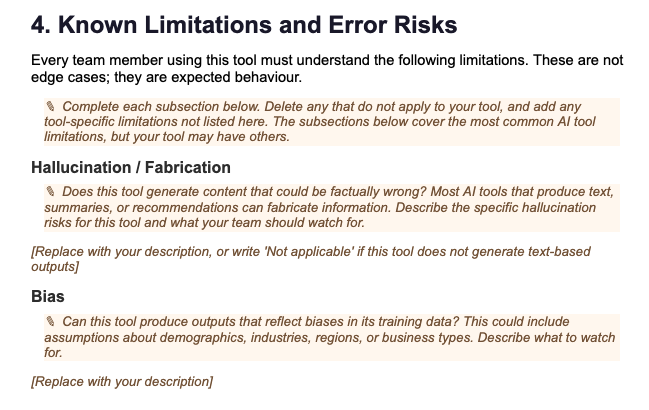
That’s why we’ve also created an AI Tool Usage Guide template to sit alongside the audit register. You fill one out for each tool on your register, and it covers everything from known error risks and data handling rules to quality control, escalation, and a signed acknowledgement your team has read and understood it.
If AI sits at the heart of your marketing strategy, understanding your compliance obligations is part of getting that strategy right. Our AI marketing services are built around responsible, effective use of AI that considers both performance and the wider regulatory landscape.
The businesses that treat AI literacy as an operational baseline, rather than a compliance checkbox, will be better placed to use AI confidently and at scale. If you want to understand what that looks like in practice for a business like yours, Conv3rt Marketing is here to help.
If you’d like to talk about how we can support your business with AI literacy, feel free to get in touch for a no obligation chat.